The Shrinking Hallway: How Resentment Narrows a Relationship

There comes a point in some relationships when the space between two people no longer feels open.
A text arrives. A door opens. A voice enters the room. Nothing visibly dramatic has happened in that exact second, yet something in the body already knows: the air is tighter now.
That is one of resentment’s clearest effects. It does not only make a person angry. It makes the space of contact feel smaller.
What was once a hallway becomes a passage. Then a squeeze. Then something closer to a crawlspace.
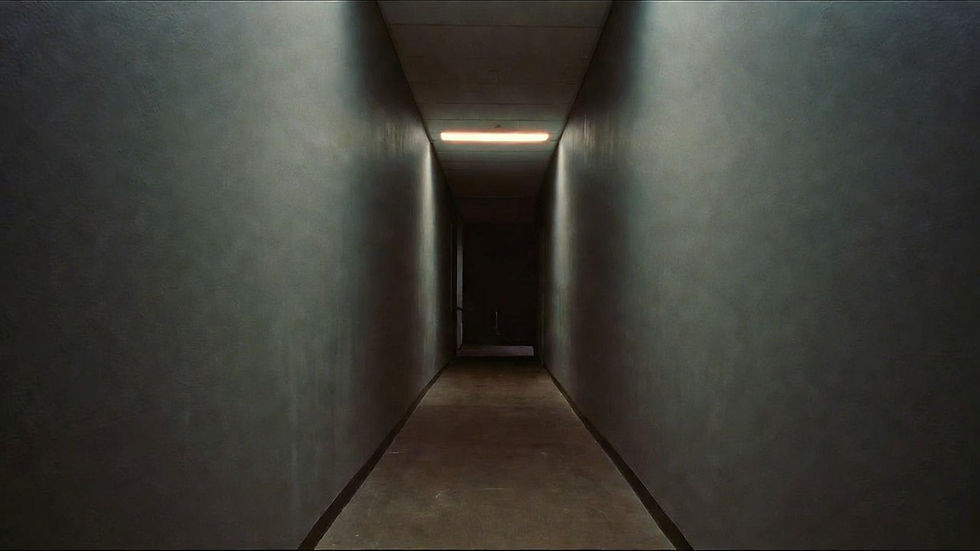
In a healthy bond, there is room in the interaction itself. Room for clarification. Room for small mistakes not to carry the full weight of history. Room for tone to be corrected, intent to be re-read, and tension not to become threat the moment it appears. A living relationship needs that kind of space. It needs width. It needs air.
Resentment reduces both.
It loads the present with the unpaid cost of the past.
Usually, that narrowing does not begin with one dramatic betrayal. It begins much smaller. It begins with micro-betrayals.
A promise lightly broken. A truth bent just enough to protect convenience. A dismissive tone in a moment that mattered. A small loyalty failure. Repeated carelessness. Being corrected harshly. Being subtly minimized. Being exposed where one should have been protected. Being made to carry costs the other person keeps refusing to name.
Often, each moment is small enough to be explained away. That is part of the problem. It is “only” the forgotten follow-through. “Only” the sarcastic remark. “Only” the private detail they should not have shared. “Only” the familiar moment where your concern is treated like overreaction. None of it looks large enough on its own. But the body does not measure only by size. It also measures by pattern.
The mind says it was minor.
The body registers a fracture.
That is how the narrowing often starts.
A bond takes in a small breach. Then another. Then another. When those breaches are named honestly and repaired early, trust can remain alive. But when the cost keeps landing without acknowledgment, something begins to change in the structure of the relationship itself.
The sequence is usually quieter and more mechanical than people realize:
micro-betrayal → accumulated unpaid cost → vigilance → resentment → hardening → disdain → contempt
That is the calculus of narrowing.
Resentment is not random irritation. It is often accumulated unpaid cost left inside the bond.
Once enough of that cost gathers, vigilance appears. The nervous system no longer approaches the relationship openly. It approaches it watchfully.
Tone matters more. Timing matters more. Omissions matter more. Facial shifts, delays, small inconsistencies, changes in energy—everything begins to carry extra weight. Attention narrows around possible threat. And when attention narrows, perception narrows with it.
A neutral question no longer lands as neutral. “Did you get the mail?” no longer feels like a question; it feels like pressure. A delayed reply feels loaded. A familiar look starts to feel like evidence. A short text gets read three times, not for what it says, but for what might be hiding inside it.
The other person is no longer met only as they are in that moment, but through the accumulated meaning of what has not been repaired.
That is why resentment is so exhausting. It does not only hurt. It changes how a person sees.
It also changes posture.
Where trust has worn thin, the self begins to brace. Speech gets shorter. Warmth becomes harder to offer. Eye contact changes. Generosity becomes expensive. The body enters the interaction partially closed before anything even happens. A once-natural kindness becomes effortful. The voice turns flatter. Even hearing the other person arrive can tighten the chest before a word is spoken.
At first, this can feel protective. And in one sense, it is. Guardedness is often the mind and body trying to stop further injury.
But what protects against further injury can also make the relationship hard to live in.
The wall built for safety also reduces oxygen.
Over time, the defended posture that once felt necessary begins to feel like confinement. The person is no longer only burdened by what the other has done. They begin to feel burdened by the very fact of contact itself. Even ordinary interaction starts to feel expensive. A simple conversation feels like something to get through. A shared errand feels heavier than it should. A minor disagreement pulls in a whole backlog that was never really gone.
The relationship starts to feel claustrophobic.
This is one of the most important truths about resentment: it does not remain a feeling about a person. It becomes an atmosphere around the bond.
And then, if the pattern continues, hardening begins.
Hardening is what happens when vigilance stops being temporary and becomes a settled way of relating. The person is no longer simply cautious. They have begun to live in chronic guardedness. Interpretations get stiffer. Mercy thins out. Flexibility declines. The ability to read present reality apart from past injury weakens.
Softness leaves the structure.
And once softness has been leaving for long enough, the bond often takes on a colder tone: disdain.
Disdain is not yet full collapse, but it is already a serious turn. It appears as dismissal, impatience, eye-rolling, flatness in the voice, a quiet sense that the other person is becoming too small to meet with care. The person is no longer only experienced as costly. They are beginning to be experienced as lesser.
This stage matters because it is one of the clearest signs that regard is failing.
Many relationships remain outwardly functional here. Dinner still gets made. Logistics still get handled. The bills still get paid. There may be no screaming, no obvious collapse, no declared crisis. But the width is already gone. The bond is no longer generous enough to carry ordinary friction without strain.
And from there, contempt is not far away.
That shift matters because disdain and contempt are not the same thing.
Disdain is the colder turn. It looks down. It dismisses. It begins to flatten the other person’s worth inside perception.
Contempt goes further. It is what happens when basic regard begins to collapse.
Once contempt enters, the other person is no longer experienced merely as disappointing, frustrating, or unsafe. They begin to feel beneath openness, beneath generosity, beneath the benefit of the doubt. Their voice irritates before the sentence is finished. Their efforts no longer register cleanly. Even their presence starts to feel invasive. At that point, the hallway is not just narrow. It is nearly sealed.
This is why micro-betrayals matter so much. Not because every small failure is catastrophic, but because repeated small failures without repair teach the body a lesson: do not walk open here.
Nothing stays small when it is repeated without repair.
That is what people often underestimate. The deepest damage is not always in the size of the single act. It is in what repeated acts train the relationship to become. Every unrepaired fracture adds a little more caution. Every avoided truth adds a little more weight. Every cost that goes unowned asks the other person to absorb one more layer of strain in silence.
Eventually the bond itself begins organizing around bracing.
That is when the real question becomes unavoidable.
Not: how do I act normal inside a narrowing hallway?
Not: how do I keep calling constriction peace?
But: what actually narrowed this space, and what truth does that now require?
Sometimes the hallway can widen again. But only through real repair: honest naming, owned cost, changed pattern, restored safety. Not improved phrasing without changed conduct. Not apology as mood management. Not temporary softness covering an unchanged structure. Real repair widens space because it removes some of the unpaid cost and stops adding new fracture to the bond.
And sometimes the clearer truth is that the structure has narrowed too far. Sometimes distance is not cruelty but accuracy. Sometimes the bond has become too airless to remain inside without losing something essential in oneself.
Either way, the work begins in the same place: seeing clearly.
Resentment is not merely a bad feeling to manage. It is often a sign that repeated strain has changed the architecture of contact. It narrows room, reduces flexibility, lowers trust, and teaches the body to enter guarded. Left unaddressed, it hardens perception. Left longer still, it can cool into disdain and eventually collapse into contempt.
The body usually knows this before the mind is ready to admit it.
It knows when the hallway has become too narrow to breathe in.
And the first honest step is not pretending otherwise.
The narrowing, in plain language
Resentment = I am carrying repeated unpaid cost.
Hardening = I am losing softness and flexibility toward you.
Disdain = I am beginning to look down on you.
Contempt = Basic regard is collapsing.


Comments